tutorial · 2024-07-12
Post-Launch Content Updates: Structuring UE5 Projects for Easy Patches
Design your content, data, and cooking pipeline so you can ship new levels, items, VFX, and dialogue without forcing a full re-download.
The cost of a bad update pipeline
Many UE5 games ship with everything in the base pak. Adding a new biome, 50 dialogue lines, or a balance pass means re-cooking and re-distributing gigabytes even if only 10 MB actually changed.
Players on slow connections or consoles with strict patch rules suffer. Live ops becomes painful.
Good structure lets you ship small, frequent, targeted updates.
Key technical practices
Use soft references and DataTables / Data Assets for all content that might be updated. Hard references pull the asset into the base pak.
Split content into multiple paks by region, biome, or feature. Load only what the player needs.
Keep gameplay logic data-driven where possible (CSV/JSON/DataTable) so balance changes don't require code or content re-cooks.
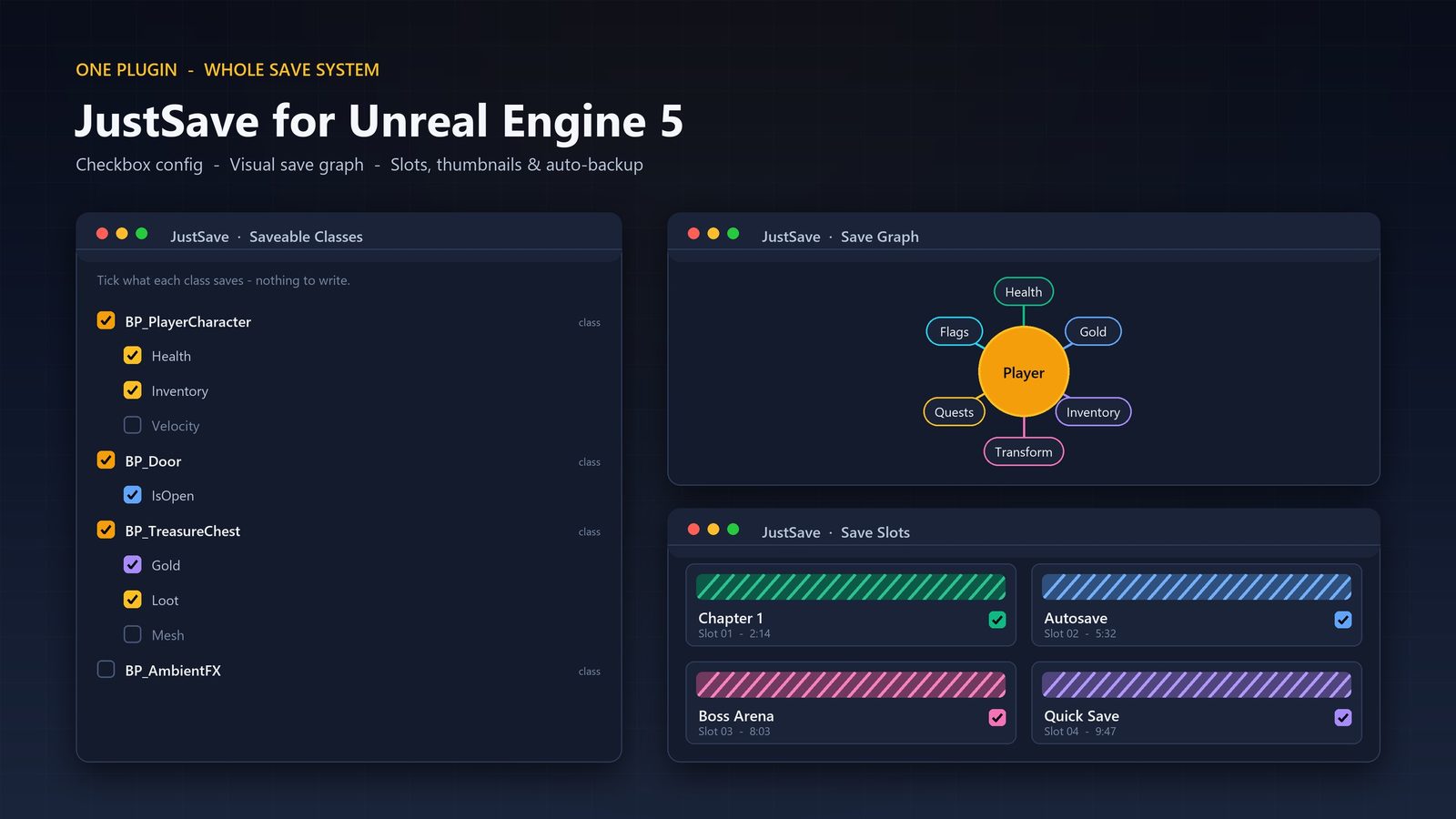
Design save data to be forward-compatible so old saves still work after adding new items or quests.
Operational habits
Have a 'content only' build configuration that cooks just the changed paks.
Test patches on a clean install + existing save to catch upgrade bugs early.
Document which assets are 'base' vs 'downloadable' so the whole team knows the rules.
FAQ
Does this affect single-player only games?
Yes. Even single-player games benefit from smaller day-one patches and the ability to add DLC or free updates without forcing everyone to re-download the whole game.
EasyHTTP
GET, POST, PUT and DELETE with headers, JSON parsing and async callbacks — REST APIs in a few Blueprint nodes. Talk to web services, backends and game APIs without touching C++.
Related on Fab
Related reading