
article · 2026-06-24
Can AI Make Game Art? What's Solved, What's Assisted, and What Still Needs an Artist
The art kitchen averages 2.57 on our buildability model — but that average hides three very different jobs: things AI nearly finishes, things it helps with, and things it still can't do without you.
Can AI make game art? Yes, no, and it depends which job you mean
If you ask whether AI can make game art, the honest answer is that the question is too coarse to be useful. Game art is not one job. It is more than a dozen distinct crafts, from painting a 2D background to rigging a character to hand-tuning a skeletal animation, and AI tooling sits at a wildly different place on each of them. Lump them together and you get the two unhelpful headlines everyone repeats: either AI has replaced artists, or AI art is a useless toy. Both are wrong, and they are wrong for the same reason.
We took the more careful route. In our Games-as-Recipes study we broke a game down into roughly 45 reusable ingredients across five kitchens, and scored each ingredient on how much of the heavy lifting a generalist can hand to AI today. The score is a 1-to-5 editorial judgement: 1 means AI does the job near end-to-end and a human just curates; 5 means expert, real-time craft that resists automation almost completely. It is our assessment of current tooling, not a measurement, and it deliberately rates the automatability of the parts, not whether the finished game is any good.
The art kitchen averages 2.57 on that scale in our buildability model. That sounds like a tidy single answer. It isn't. The average hides three separate tiers — work AI nearly finishes, work it assists, and work it can't yet do without an artist — and knowing which tier your task falls into is the whole game.
Solved at 1-2: the flat, judge-it-on-its-own art
At the easy end of the art kitchen, our buildability model puts six crafts at difficulty 1 or 2: 2D backgrounds and concept and marketing art at 1, then 2D illustration, pixel art and sprites, PBR texturing, UI and HUD art, and procedural terrain all at 2. These are the jobs where, in our editorial assessment of current tooling, AI does most of the work and a human curates the output.
The reason they cluster is not luck. Every one of these artefacts can be judged on its own, as a still image or a self-contained surface, without a player moving through it. A 2D background is right or wrong the moment you look at it. A PBR texture set tiles correctly or it doesn't. A marketing key-art piece either reads at a glance or it doesn't. When an artefact can be evaluated in isolation, text-to-image and texture-generation tools can iterate toward it fast, and the human's job collapses to taste: picking the strongest fifty of five hundred generated options and rejecting the off-brand ones.
If your pipeline is mostly these crafts — a 2D game, a marketing push, a texturing pass on existing meshes, a procedurally laid-out terrain — then yes, AI can make most of your game art, and the bottleneck moves from production to curation and art direction. That is a genuine, order-of-magnitude shift in how fast a small team can fill a screen.
Assisted at 3: the 3D and motion work where AI does the boring half
The middle tier is where most of the confusion lives. Our buildability model scores four art crafts at difficulty 3: 3D props, rigging, VFX and particles, and shaders. At a 3, AI is a real force multiplier but not a replacement — it does a meaningful chunk of the grunt work and a human finishes, corrects, and integrates.
Take 3D props. Mesh-generation tools can rough out a barrel, a crate, or a fantasy relic from a prompt quickly, but topology, scale, LODs, collision, and getting the thing to sit correctly in your scene are still human work. Rigging is similar: auto-rigging gets you a serviceable skeleton on a humanoid in seconds, and then you spend your time fixing the weights that pinch at the shoulders and hips. Shaders sit here too — an assistant can scaffold a material graph, but dialling it in against your lighting is a craft pass.
VFX is the most interesting case in this tier, because it splits cleanly into a part AI handles well and a part it doesn't. Generating the look of an effect — the sprite frames, the flipbook, the glow — is close to the solved tier. Authoring the system that makes those frames behave in Niagara is the difficulty-3 craft. That split is exactly the seam our AI Flipbook Generator works along: you describe an effect in text, it bakes the generated frames into a Texture2D, a Material Instance, and a ready-to-drop Niagara System, so the AI-easy half is automated and you keep your hands on the parameters that decide how it actually reads in motion.
Still needs an artist at 4: game-ready characters, environments, and animation
Then there is the hard tier, and it is the reason 'AI makes game art now' is only half true. Three art crafts sit at difficulty 4 in our buildability model: game-ready 3D characters, 3D environment art, and skeletal animation. At a 4, AI shaves the edges but the core still needs a skilled human, and the result is not shippable without one.
The pattern that made the easy tier easy is exactly what breaks here. A game-ready character is not a single artefact you can judge in isolation — it is clean topology that deforms correctly, a UV layout that bakes cleanly, a material that holds up under your lighting, a rig that animates without tearing, and a silhouette that reads at gameplay distance, all at once. Generators can produce a striking hero mesh; turning that into something that survives contact with an engine, a skeleton, and a frame budget is still craft. 3D environment art is the same problem at building scale: composition, readability, performance, and the way a space guides a player are judgements no current tool makes for you.
Skeletal animation is the clearest case of all. It scores a 4 because animation is judged in motion, against timing, weight, and anticipation — the qualities that make a movement feel alive rather than merely correct. Tools can retarget and interpolate, but the hand-tuned keyframe craft that gives a character its sense of mass is, in our assessment, one of the slowest art frontiers for AI to move. If your game's identity rests on bespoke characters, environments, or animation, AI changes your cost on the surrounding work — not the difficulty of the work that defines you.
Why the art kitchen averages 2.57 — and why the average lies
Average the fourteen art crafts together and you land at 2.57 on our buildability model, which places the whole art kitchen in the AI-assisted band. For comparison, the audio kitchen averages 2.2, narrative 2.78, code 3.0, and polish and feel 3.75. Art is the second-most automatable kitchen overall, which is genuinely why so many people feel like AI has cracked game art: the most visible, most shareable outputs — the concept pieces, the backgrounds, the textures — really are in the near-solved tier.
But a kitchen average is a centre of gravity, not a verdict on any one task. The art kitchen spans from difficulty 1, where AI does the job near end-to-end, to difficulty 4, where you still need an artist — a three-point spread on a five-point scale. Planning a project off the 2.57 average is how teams get burned: they budget as if all the art is AI-assisted, then discover their character pipeline and animation are sitting at the hard end and consuming the schedule.
The useful move is to read the tiers, not the mean. Sort your actual art tasks into the three buckets — near-solved, assisted, still-needs-an-artist — and you get an honest production plan instead of a vibe. Most of the surprises in game-art schedules come from a difficulty-4 task that someone budgeted as a difficulty-1 task because 'AI does art now.'
The honest dividing line: artefact generation versus in-motion judgement
Step back and one clean rule explains the entire art kitchen. The crafts AI has nearly solved are the ones whose output is a standalone artefact you can judge by looking at it: a background, a texture, a piece of UI, a marketing image. The crafts that still need an artist are the ones whose output can only be judged in motion or in context: a character moving through a frame budget, an environment guiding a player, an animation carrying weight and timing.
Generation of artefacts is largely solved because an artefact can be evaluated on its own and iterated toward fast. Synthesis under engine, performance, and feel constraints is not, because it can only be judged in play, against everything else in the scene. This is the same fault line that runs through every kitchen in our study — content that stands alone is cheap now, craft that only makes sense in motion is not — and it is the single most reliable way to predict, before you start, whether an art task is something AI will finish or something it will merely help with.
So the practical answer to 'can AI make game art' is: it can make the art you can judge as a picture, and it can assist heavily with the art you assemble in 3D, and it still needs you for the art that only exists once it moves. Plan around that line and AI is a force multiplier. Ignore it and you will keep being surprised by which tasks blow up your timeline.
What this means for your pipeline today
If you are building art for an Unreal project right now, the strategy writes itself once you read the tiers. Hand the near-solved work to AI aggressively: generate your 2D backgrounds, concept and marketing art, and PBR texture passes, and spend your saved hours on art direction and curation rather than execution. There is little defensible advantage in doing difficulty-1 art by hand when everyone else can generate it too — the value there is taste, not labour.
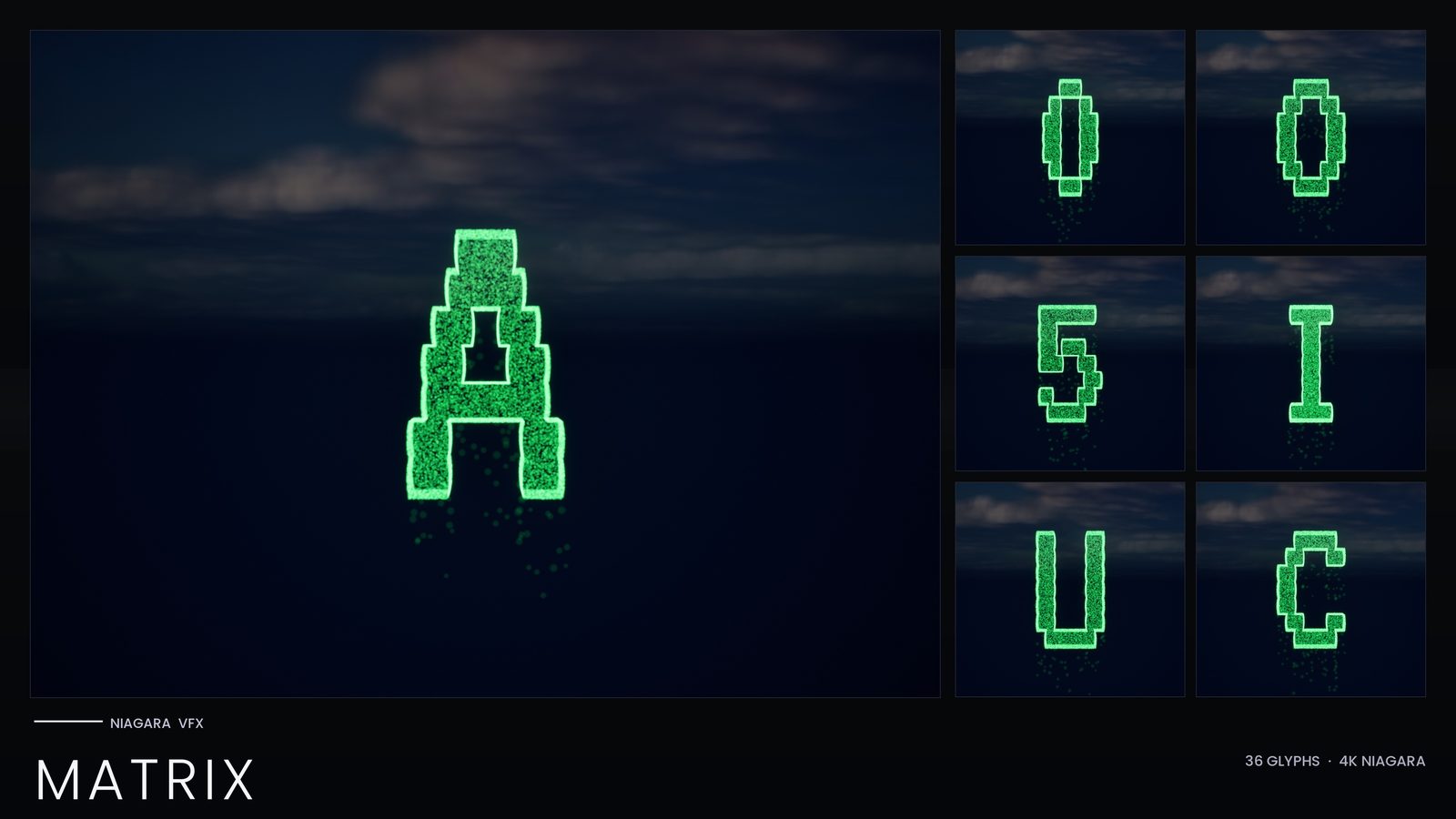
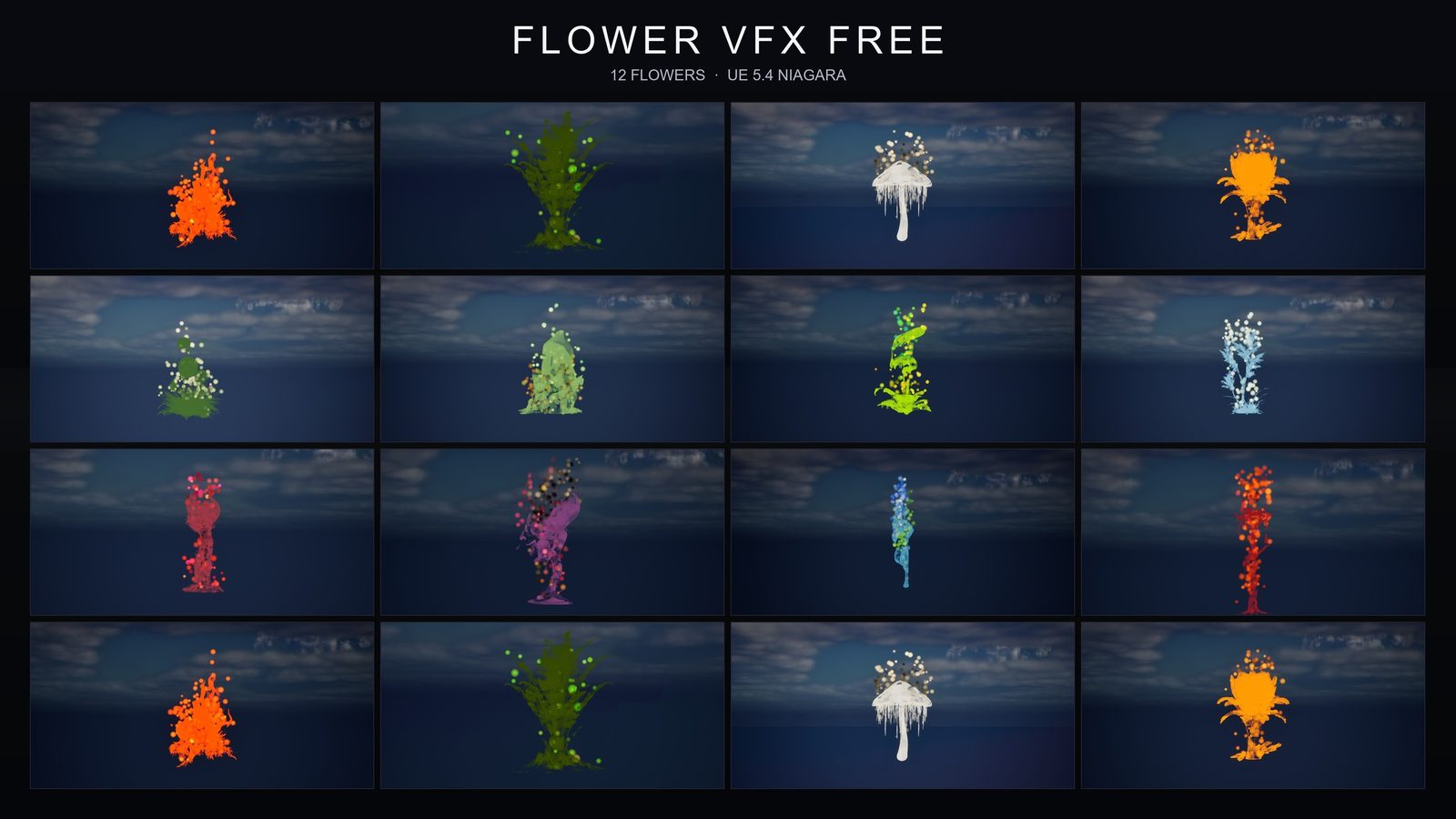
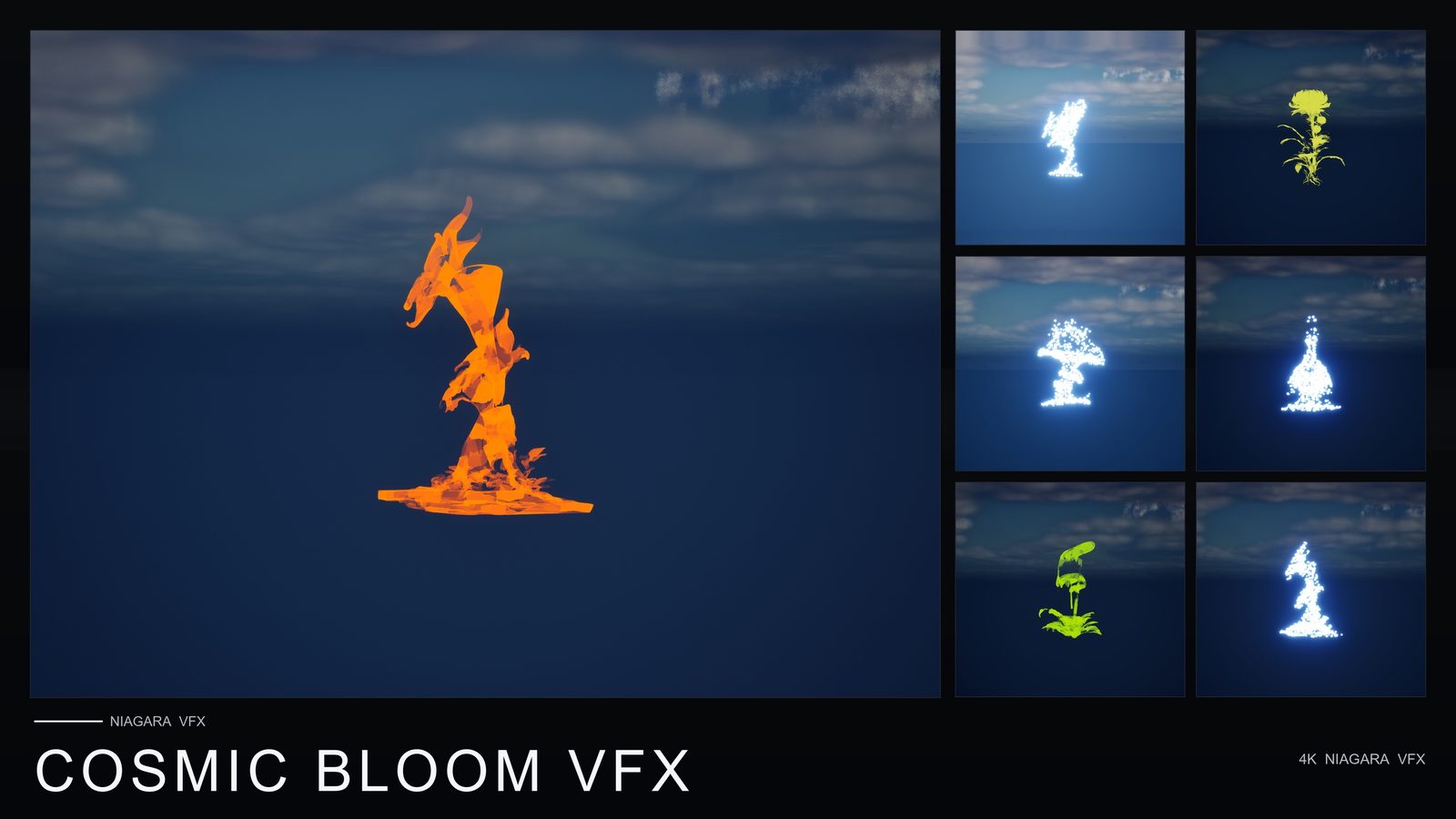
For the assisted tier, lean on the seam between the AI-easy look and the human-tuned behaviour. VFX is the cleanest example: let a tool generate the frames and bake the Niagara system, then spend your time on the parameters that decide how the effect reads. That is the workflow our AI Flipbook Generator is built around, and it is also why curated effect packs still earn their place — a hand-authored set like the Niagara Matrix Pack, the free Fantasy Flower VFX sampler, or the Lumen-lit Cosmic Bloom VFX gives you a finished, tuned behaviour to drop in or learn from, rather than a raw generation to fix.
And for the hard tier, do the opposite of what the hype suggests: protect it. Your game-ready characters, your environment art, and your bespoke animation are exactly where a human artist still makes or breaks the result, so that is where your art budget should concentrate — not despite AI, but because AI has made everything around it cheap. Let the model commoditise the artefacts and put your craft where it can't reach.
The art kitchen, by tier
| Art craft | AI-build difficulty | Tier |
|---|---|---|
| 2D backgrounds | 1 | Solved — AI does most, human curates |
| Concept & marketing art | 1 | Solved — AI does most, human curates |
| 2D illustration | 2 | Solved — AI does most, human curates |
| Pixel art / sprites | 2 | Solved — AI does most, human curates |
| PBR texturing | 2 | Solved — AI does most, human curates |
| UI / HUD art | 2 | Solved — AI does most, human curates |
| Procedural terrain | 2 | Solved — AI does most, human curates |
| 3D props | 3 | Assisted — AI does the boring half |
| Rigging | 3 | Assisted — AI does the boring half |
| VFX / particles | 3 | Assisted — AI does the boring half |
| Shaders | 3 | Assisted — AI does the boring half |
| 3D characters (game-ready) | 4 | Still needs an artist |
| 3D environment art | 4 | Still needs an artist |
| Skeletal animation | 4 | Still needs an artist |
AI-build difficulty is our editorial 1-5 judgement of current tooling (1 = AI does it near end-to-end; 5 = expert real-time craft). It rates the automatability of the parts, not the quality of the result. From the MythicLemon buildability model.
How the art kitchen compares
| Kitchen | Average difficulty |
|---|---|
| Audio | 2.2 |
| Art | 2.57 |
| Narrative | 2.78 |
| Code | 3.0 |
| Polish / feel | 3.75 |
Average ingredient difficulty per kitchen, lower meaning more automatable. From the MythicLemon buildability model — an editorial assessment of current tooling, not a measurement.
FAQ
Can AI make game art end-to-end?
For some art crafts, close to it. In our buildability model, 2D backgrounds and concept and marketing art score a 1, meaning AI does most of the work and a human curates. But other art crafts — game-ready 3D characters, 3D environment art, and skeletal animation — score a 4 and still need a skilled artist. There is no single answer; it depends entirely on which art task you mean.
What game art still needs a human artist?
In our editorial assessment of current tooling, the three art crafts at difficulty 4 are game-ready 3D characters, 3D environment art, and skeletal animation. They resist automation because they can only be judged in motion or in context — against a frame budget, a player's path, or the timing and weight of a movement — rather than as a standalone image.
Where does AI help with 3D and VFX work?
Our buildability model puts 3D props, rigging, VFX and particles, and shaders at difficulty 3 — assisted, not solved. AI does a real chunk of the grunt work (roughing a mesh, auto-rigging a skeleton, generating effect frames, scaffolding a material graph) and a human finishes the topology, weights, in-engine behaviour, and tuning.
Is the art kitchen really easier for AI than code or polish?
On our buildability model, yes on average. The art kitchen averages 2.57, below narrative (2.78), code (3.0), and polish and feel (3.75), and just above audio (2.2). But that average spans crafts from difficulty 1 to 4, so it should never be used to budget a project — read the individual tasks, not the mean.
Does an easy difficulty score mean the art will be good?
No. The difficulty score measures how much of an art task AI can automate, not whether the result looks good or fits your game. A difficulty-1 craft like a 2D background generates fast, but choosing the right one and directing it to fit your world is still a human judgement. Buildable is not the same as good.
AI Flipbook Generator
Type a prompt, get a game-ready effect. AI Flipbook Generator turns text into flipbook spritesheets via OpenAI image models, then bakes them to Texture2D, Material Instance and a ready-to-drop Niagara System — with a 55-entry effect library, style presets and multi-variant batching. Uses your own OpenAI API key; nothing is proxied through us.
Related on Fab
Related reading