article · 2025-11-03
AI-Assisted Level Design in UE5: What Actually Works in 2026
A realistic assessment of where AI tools help level designers today and where they still create more work than they save.
The hype vs the actual job of level design
AI can generate geometry, suggest props, and even paint foliage. What it cannot do is decide why a space should feel dangerous, or fair, or surprising, or boring in exactly the right way for your game.
The highest-leverage uses of AI for level designers right now are as very fast 'junior assistants' for the mechanical parts of the job, while the designer stays firmly in the creative and experiential seat.
Teams that treat AI as a full replacement for level design process are the ones posting 'we generated 50 levels and none of them were fun' threads.
Where AI is genuinely useful today
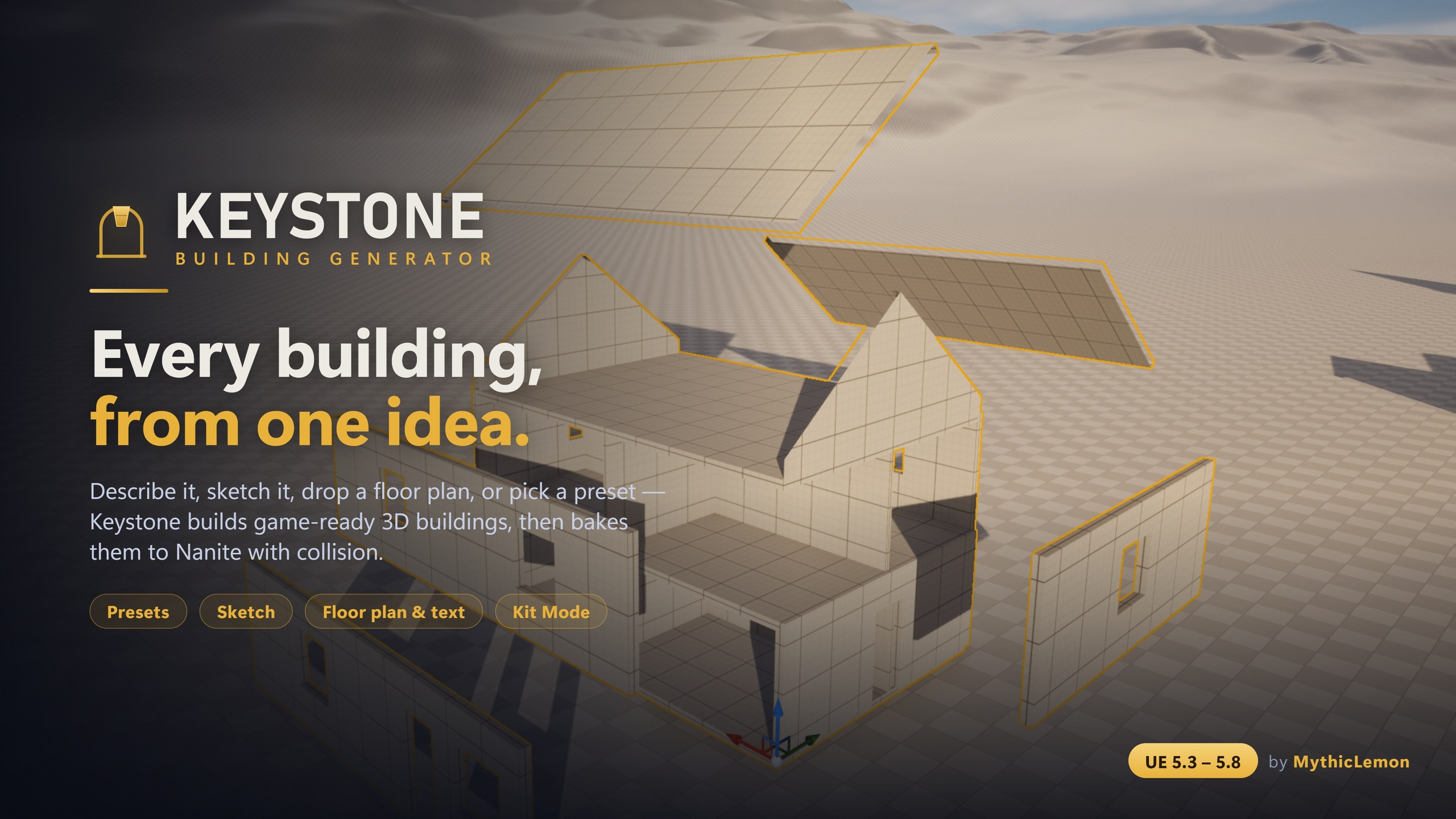
Rapid blockout and greybox iteration: tools like Keystone (with or without AI inputs) let you go from sketch or text to playable space in minutes instead of hours.
Prop and foliage population suggestions: AI can propose densities and layouts that you then curate. This is especially useful for large background areas.
Lighting and mood exploration: generating multiple lighting scenarios or VFX card ideas (AI Flipbook Generator) so you can pick the direction instead of starting from a blank canvas.
Data and validation: finding missing collision, bad navmesh, or performance hotspots across a large map.
Where AI still creates more work
Precise gameplay spaces: jump distances, sightlines, cover placement, and encounter pacing almost always need human judgment. AI suggestions here often need heavy editing.
Narrative and emotional beats: AI does not understand the player's emotional journey through your specific level.
Style consistency across a whole game: generated pieces often look plausible individually but clash when assembled.
Long-term maintainability: AI-generated Blueprints and level scripts tend to be messy and hard for other humans (or future you) to understand.
A healthy workflow
Use AI to produce options and rough drafts at 5-10x the speed you could by hand. Spend the saved time on curation, tuning, and playtesting.
Keep a clear 'human edit pass' step. Anything that goes into the final game should be reviewed and often partially rebuilt by a designer who understands the intent.
Track which AI outputs were actually useful. Over time you will learn which prompts and tools are worth using and which are just generating noise.
FAQ
Will AI replace level designers?
Not in the foreseeable future. It can replace some of the slow manual labour, but the core skill of shaping player experience is still deeply human.
Mythic Dev Assist
Give AI coding agents (Claude Code, Cursor, any MCP client) eyes inside Unreal — a queryable causal world model exposing perception, memory, causality, verification and action through an in-editor HTTP bridge and an external MCP server. Observe, set, create, destroy and watch the editor programmatically.